Your Way to Better Health with Homeopathy
Please read on to find out how this sophisticated, yet simple form of medicine can benefit you.
Homeopathy is for you............
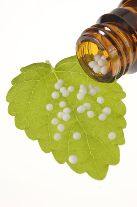
What is Homeopathy?
are the true healers of disease"
Hippocrates
What can be Treated?
The number of conditions that homeopathy can help with is extremely far ranging. This is because the focus of treatment is on the person and how they are expressing their symptoms, rather than on the specific disease or complaint itself. For further information please click here for links or call me on 01227 793665 to discuss how homeopathic treatment may help you.
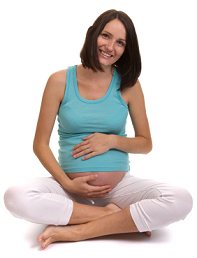
Homeopathy in Pregnancy
Homeopathic treatment is also completely safe and very beneficial to use in pregnancy.
The Homeopathic Consultation
Your first consultation will last for 1 - 1½ hours. In this time a detailed case history is taken to build up a complete picture of your condition. This will include details of your past medical history, family medical history, and general lifestyle as well as other aspects of your life such as your emotional state, your sleep patterns and how you cope with stress.
what person the disease has
than what disease the person has"
Hippocrates
Follow up consultations are usually arranged at 4-6 week intervals depending on the nature of your complaint. These appointments last 30-45 minutes in which time the effectiveness of the prescribed remedy will be assessed and the appropriate action taken.
For long term complaints I suggest that you allow for 3 sessions to assess benefit. I would expect that if homeopathy can help you, that we would see progression in the right direction within this time. Optimal or full resolution of the complaint however, may take longer and expectations with regard to this can be reviewed at each appointment.
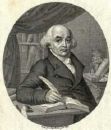
The History of Homeopathy
Homeopathy was developed by Dr Samuel Hahnemann (1755 -1843). History tells that Hahnemann was translating a scientific paper by William Cullen, a Scottish Physician, on his theory why Cinchona Bark (a source of quinine and a popular drug at the time) was successful in treating Malaria. Hahnemann disagreed entirely with his findings and decided to carry out some experiments of his own. It was from these initial experiments that he developed the homeopathic principles and the complete system of medicine that is used by homeopaths today.
The Law of Similars
The main principle behind homeopathic prescribing is the concept of ‘like cures like’. A substance that can CAUSE a set of symptoms in a healthy individual can be used to CURE a similar set of symptoms in a sick individual.
For example, the substance coffee has the ability to stimulate the mind to the point of sleeplessness, amongst other symptoms. If somebody has a simlar kind of sleeplessness (and it wasn’t due to excess coffee) the remedy Coffea, which is made from coffee may help.
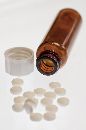
What are remedies made from?
Homeopathic medicines, known as remedies, are made from a wide range of mostly naturally occuring substances. Most are made from plants or minerals, but some are made from animal substances such as ink of the cuttlefish.
Each remedy undergoes a special process known as potentisation which involves diluting the substance concerned and then shaking it vigorously with impact. This process renders the substance non-toxic and more medicinally active.
The remedies are usually dispensed in pillule form.

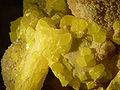
Arnica Montana - Mountain Daisy
Arnica is an excellent plant remedy for shock and trauma of all kinds and also for general bumps and bruises, a must for all first aid kits.
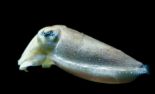
Cuttlefish
The remedy Sepia is made from ink of the cuttlefish.
It is used for many conditions of hormonal imbalance.
Homeopathy is a truly holistic therapy, and I believe that it offers as much, and more, now in the 21st Century, as it did when Hahnemann first brought about this healing art in the late 18th Century. As Hipprocates said "Healing is a matter of time, but it is sometimes also a matter of opportunity". I believe homeopathy can help present this window of opportunity to a person to let life heal itself.
Where appropriate or requested I also use Bach Flower Essences and have trained with Tessa Jordan on a Bach Flower Essence course specifically tailored for homeopaths. Flower Essences are particularly useful in cases where there is an emphasis on emotional symptoms and they can be used alongside homeopathic remedies or on their own.
The letters MARH show that I have fulfilled the criteria necessary to become a full member of the Alliance of Registered Homeopaths (ARH). The ARH is committed to supporting and encouraging its members to grow and develop as practitioners enabling them to effectively meet the diverse needs of their patients and to engage in a high standard of homeopathic practice. All members are bound by the ARH Code of Ethics and Practice.
Samuel Hahnemann, Organon of Medicine

.jpg/$file/HLogoandwebaddress($1$).jpg)
.jpg/$file/images($1$).jpg)